The Saddest Thing Ever
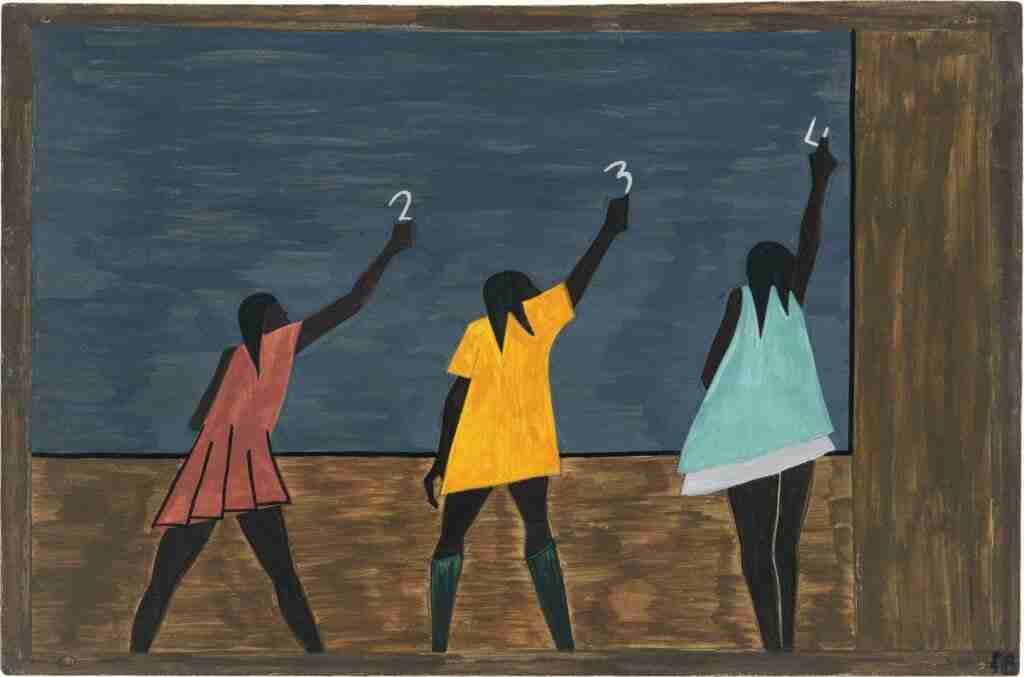
“In the North the African Americans had more educational opportunities.” Panel 8 by Jacob Lawrence
In the 54 years preceding 1970, six million African Americans moved out of the rural South to the urban Northeast, Midwest, and West during a period we now call The Great Migration. It is one of the largest and fastest internal movements of people in human history that wasn’t motivated by war or famine. For some, the story is that they moved in search of better economic opportunity. Others say they did not move, rather they fled— escaping the lynchings and racial terrors legalized by Jim Crow laws.
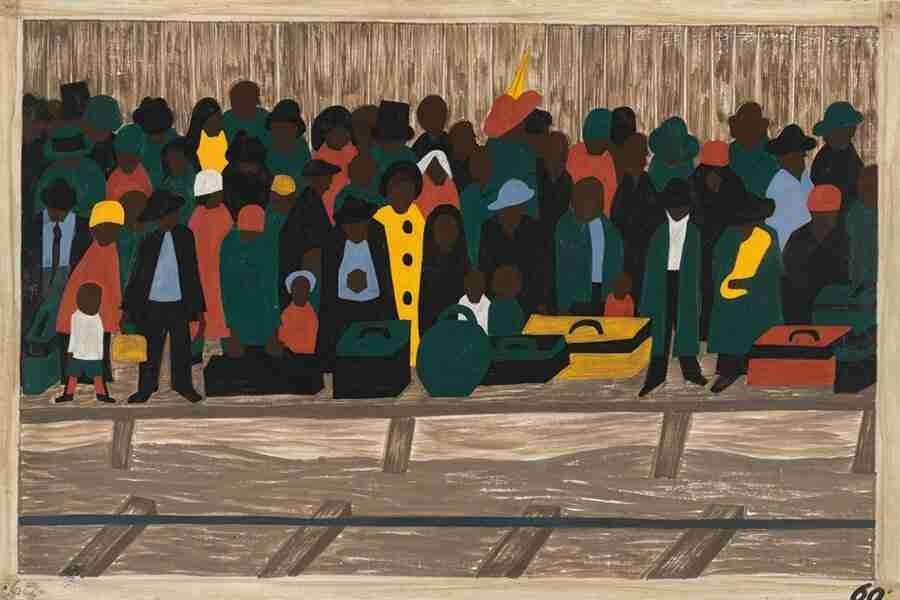
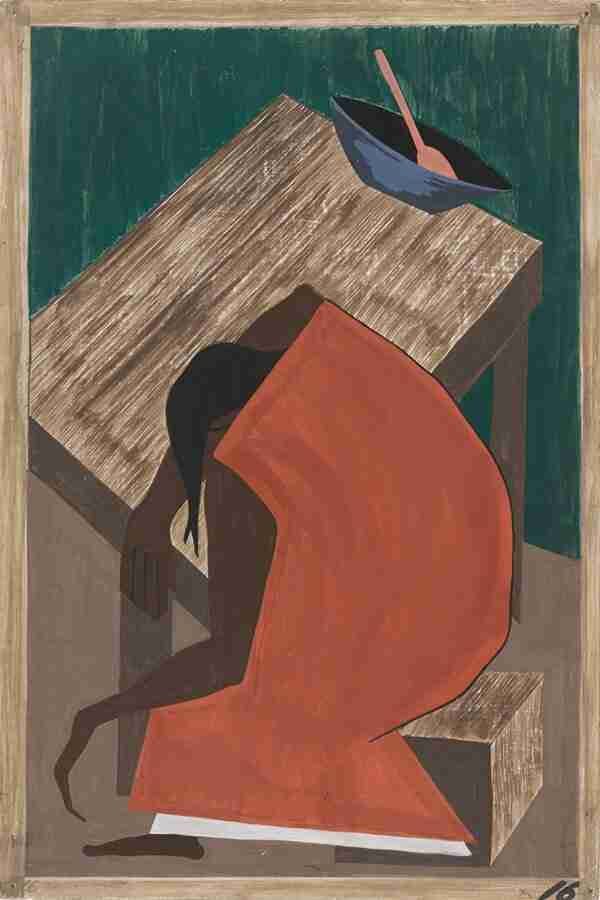
This is the message civil rights lawyer, author, and founder of the Equal Justice Initiative Bryan Stevenson shared in 2015 as a guest lecturer at the Manhattan Museum of Modern Art (MoMA), which I attended, when the museum opened their exhibition celebrating Jacob Lawrence’s Migration Series— a collection of 60 paintings, each accompanied by a caption, depicting various stories along the journey to somewhere else.
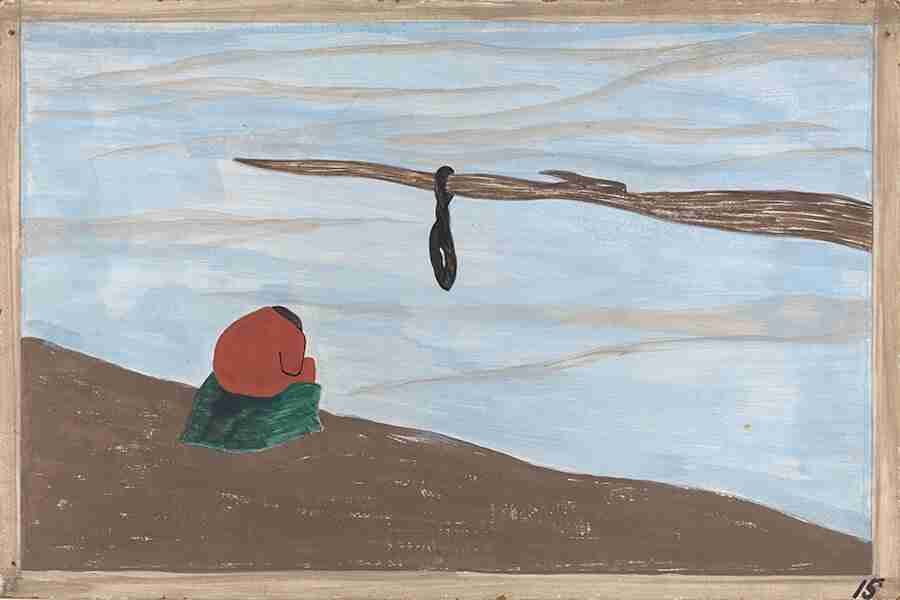
A figure slumped over in grief as a noose dangles in the foreground. People with their suitcases crushed onto a train station platform. A woman pouring tea for small children gathered around the flame of a single candle. Three girls in a classroom writing numbers on a chalkboard.
Simple moments presented in sequence, together an effort to end the silence that had been forced onto a people, while the masses lived on in ignorance.
This was the conversation inside the building. Outside, in the icy damp breeze of winter, a group of anti-death penalty advocates assembled to protest the case of Kelly Renee Gissendaner. Gissendaner was a white lady who faced execution as punishment for orchestrating the murder of her ex husband. Advocates said the penalty was unconstitutionally harsh, because she did not personally commit the crime. (The actual killer, her lover, took a plea deal and was sentenced to life in prison.)
The media frenzied around the story, which gained so much momentum that even Pope Francis issued a call for mercy. Despite the attention, nothing seemed to be working.
This was strange to me, and I wanted to understand why the courts seemed powerless. And so, seeing as I was in the room with the man who successfully saved dozens of people from death row, I figured I would try to ask him about it. I approached him after the talk, and said,
“Mr. Stevenson, thank you so much for your work and dedication to our community. You are a role model for me. I was curious what you thought about the case of Kelly Renee Gissendaner. It’s getting a lot of press, do you think her execution will be stayed?”
He paused for a moment, I suspect caught off guard by the question, and then replied.
“I’m not optimistic,” he said sincerely, shaking his head. “It’s not the right case.”
“What do you mean?” I asked.
In a few succinct sentences, he explained that because of the political nature of death penalty cases, the facts and the perceived injustice needed to be simple enough for the average person to understand, and it also needed to be able to hold its own in the media, while still having a truly debatable legal argument. This case, while clearly attracting sympathy, didn’t meet the requirements.
I asked him if he believed that type of Goldilocks case existed, and he said that it did. “We just have to wait for the right time, because everyone needs to be paying attention for us to win.”
The “right” case for impeachment would’ve probably been something similar to the “right” death penalty case. Unfortunately, Nancy Pelosi and the congressional Democrats didn’t get to wait for it, and now they’re trying to make the best of a unideal circumstance.
Republicans are scheming and successfully muddling the process so that the news cycle is inundated with procedural minutiae that must be reported, but is exhausting and hard to understand.
Take last week’s New York Times Sunday Review, as an example. Six of the 15 articles were related to Trump’s impeachment trial. They were all good and important, but one quote from a Democratic staffer in Maureen Dowd’s piece summed up the issue nobody has, so far, figured out how to surmount, “Our phones aren’t ringing. Nobody cares. It’s the saddest thing ever.”
It is the saddest thing ever, because we’re in the midst of a new type of great migration— a migration of values— and by choosing not to pay attention, we are choosing instead to live on in ignorance.
This time, I wonder, who will suffer the consequences?
Los Angeles, CA, USA
February 2020