
Learning to Walk Again
It was more complicated than I expected.
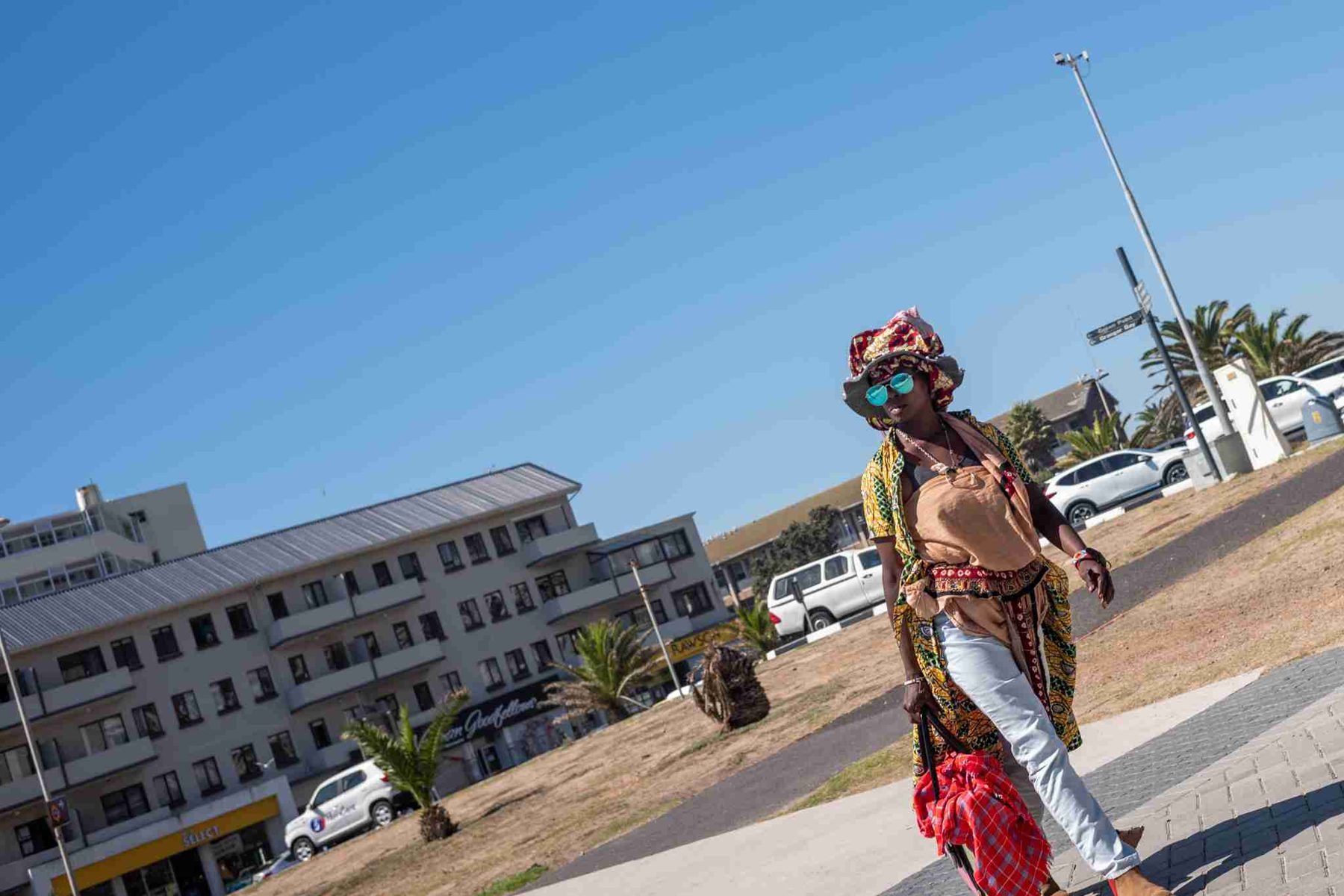
In my two years in Cape Town, I’ve been followed, yelled at, and preached to. I’ve seen people robbed, punched in the head, and chased. In some areas, teenagers openly inject drugs while adults look on—or, like me, pretend not to see. People are always surprised by how comfortable I am in this chaos, and I have to remind them that I moved here from Los Angeles. Cape Town is mild compared to what I’ve seen there.
These two cities share more than a general neglect for poor and vulnerable people. For starters, they’re both coastal with temperate weather, and they’re driving cities with strong car cultures. Driving is a way of life, but so is walking. As far as I’m concerned, every city is a walking city. In LA, I once walked half the length of Sunset Boulevard from Hollywood to Chinatown, and in Shanghai, I joined a group of French tourists from my hostel and accidentally walked 14 miles in a day, not realizing how sprawling Shanghai was. I was wrecked for a week afterward, but I didn’t mind.
I felt quite at home in New York City, though ironically, my farthest walk was only across Midtown. This perplexed my mom. She was raised in Queens and went to high school in Manhattan—running around the city was her after-school program. That’s why she says she loves to walk. I think it’s in our genes. Back in 1900s in Jamaica, my maternal great-grandmother, Aunt Drus, would walk up and down ‘the hill,’ which was really a mountain, to do her shopping in town. The story goes that her father, Pa Will, a wealthy man, would walk while his horse followed him. I believe I am a walking person because I come from a walking people; it is a fundamental aspect of my identity. So as ever-present as danger can be in Cape Town, I wasn’t about to let it turn me into something I’m not. However, to walk safely, I would need to learn to differentiate between genuine danger and mere difference.
Adapting to common threats, such as pickpocketing and cell phone snatching, was simple: I kept my pockets empty and avoided taking out my phone in public. Spotting and avoiding potential perpetrators before they targeted me was also straightforward because I recognized their traps and always had multiple routes to my destination. What was difficult, however, were the children.
Here’s how it usually goes: A young child, usually around six or seven years old, approaches me and says, "Uncle, I don’t want money. Please, can you just buy me some bread?" Nearby, a parent waits, expecting that I'll fulfill my moral obligation by giving the child cash or taking them to buy bread, which they then resell at a discount to the same shop. If I didn’t live here, I’d give them some cash and keep it moving. But I can't do that every day. I’ll be seen as the community ATM and surely be robbed! It's also not easy to simply refuse and walk away. The children are persistent. They'll follow me, cling to my arms, and some may even cry. I know it's all a performance, but they're still children and my human instinct is to care for them. This is a situation where 'doing the right thing' is the trap.
The dynamics are intricate, but morality stands firm. Any response that sacrifices the humanity of the child to ensure my safety would reflect a failure of my character, a lack of creativity, and indeed, cowardice. Conversely, sacrificing my safety to uphold the child's humanity is equally unacceptable. My task then was to find a way to uphold both principles without compromise.
The solution was straightforward yet somewhat unexpected: I needed my neighbors to perceive me not as an outsider, but as a familiar member of the community. Genuine belonging provides safety, because people protect what they cherish and those they feel connected to.
I decided to test my hypothesis with a young Colored teenager whom I see often. He's about 14 years old and always asks me for money even though he knows I don’t carry cash. A few days after one of our usual exchanges, I saw him again and raised one friendly eyebrow. I was trying to imply that I recognized him and that I knew he recognized me too. He waved and gave me a thumbs up. This kid is intelligent and a natural leader. He moves with confidence and assertiveness, with a sense of style but without arrogance. He’s a vibe. And even though his teeth are decayed, maybe from never having been to a dentist, he’s always quick with a smile.
To transcend our economic differences, I had to prove to him that I was sensitive to his circumstances and that I was willing to help occasionally, but I also couldn’t be expected to pay him a tax every time I walked outside. Most importantly, I needed to believe in his decency and integrity as a fellow human also striving to uphold moral standards. I trusted that he would act accordingly, at least in his interactions with me. Slowly, the shifts came. He stopped asking for money all the time, and sometimes I’d treat him to a hot chocolate and a croissant. If he saw I was busy, he’d leave me alone.
I applied this approach to varying extents with several people, including some parents, and because Cape Town is as gossipy as it is beautiful, word spread. People in the area still occasionally ask me for money, but now they accept my refusal the first time—even the kids. While we don't know each other’s names, my neighbors and I recognize each other as individuals. It might not seem significant, but it’s what was needed for them to give me what I wanted most: the ability to walk in peace—vigilant, but unafraid.